
What goes into preparing for a 42.2km marathon? Dynamic Physiotherapist Mitch shares his first Melbourne Marathon experience, including his training approach, nutrition strategy, running shoe choices and lessons for his next race.
Introduction
Running a marathon is about more than simply building up your kilometres. It requires months of preparation, a structured training plan, appropriate nutrition, recovery and the ability to adapt your body to the demands of running 42.2km.
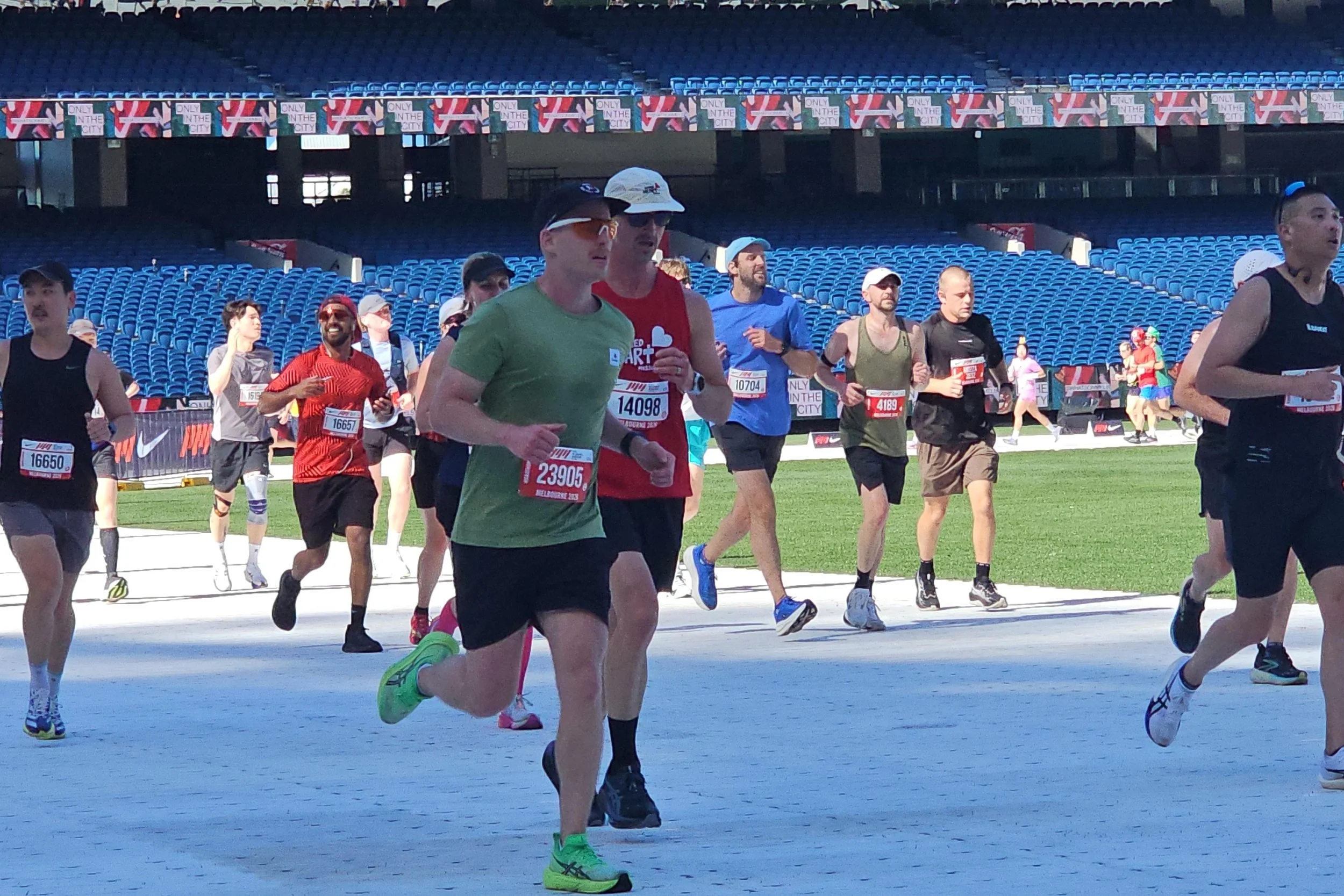
For Dynamic Physiotherapist Mitch, completing his first Melbourne Marathon was the result of approximately 40 weeks of consistent training, including a dedicated 16-week marathon preparation block.
Having completed the race, Mitch reflects on what worked, what he would change next time and what other runners can learn from his experience.
Whether you're preparing for your first marathon or simply looking to improve your running, here's a closer look at his journey.
1. Building a Training Foundation
Mitch consistently trained two to three times per week during the 40 weeks leading up to the Melbourne Marathon.
During the final 16 weeks, he followed a more structured, periodised program, using four weeks of training followed by one deload week to manage his overall training load.

His weekly running schedule included:
Tuesday: Easy base run, initially around 7km
Thursday: Easy base run, initially around 7km
Sunday: Long run, starting at approximately 12km and gradually increasing towards 32km
His shorter base runs gradually increased to around 10km, while his Sunday long run continued to build to prepare him for the demands of marathon distance.
Alongside running, Mitch maintained one upper-body and one lower-body strength session each week. This helped him maintain his existing muscle mass and strength while supporting his running performance.

Why Include Strength Training?
Running places repeated demands on the lower limbs. Maintaining strength alongside running can help support the physical demands of training and contribute to running performance.
Rather than replacing running sessions, Mitch used strength training as part of his overall preparation.
2. Reducing Training Load Before Race Day
In the two weeks leading up to the marathon, Mitch incorporated a taper period.
A taper involves reducing training volume before an event to allow the body to recover from accumulated training demands while maintaining some running activity.
During his final week, Mitch completed:

A 7km base run on Tuesday
A 3km shakeout run on Friday
The shorter Friday run was also useful from a confidence perspective before race day on Sunday.
Reducing training volume before a marathon is an important part of preparation. The aim is to arrive at the start line feeling recovered and ready to perform.
3. Pre-Race Nutrition: Fueling Before the Marathon
Nutrition was another important part of Mitch's marathon preparation, particularly during the three days leading up to the event.
It's important to remember that nutrition strategies can vary depending on your body, training demands and event goals. Mitch's approach was based on his own preparation and may not be suitable for everyone.
Carbohydrate Loading
Carbohydrates are an important fuel source during endurance exercise. Increasing carbohydrate intake before a marathon helps maximise the body's stored carbohydrates, known as glycogen, in the muscles and liver.

For Mitch, who weighs approximately 75kg, his target was around 8g of carbohydrates per kilogram of body weight per day during the three-day loading period.
This worked out to approximately 600g of carbohydrates daily.
To reach this target, he prioritised foods that were relatively low in fibre and easier to digest, including:
White rice
White bread
Fruit juice
Sports drinks
He also used Maximus sports drinks, with one litre providing approximately 80g of carbohydrates, making it easier to increase his intake while maintaining hydration.
Hydration and Electrolytes

Hydration is about more than simply drinking water. Sodium is an important electrolyte that helps regulate fluid balance, particularly during prolonged exercise and sweating.
Before the race, Mitch used Precision Hydration 1000 tablets mixed with 500ml of water, both the night before and on race morning.
He also used a Nomio supplement containing broccoli sprouts and lemon, taking it the night before and approximately three hours before the race. Mitch included this as part of his personal preparation, although he noted that it was difficult to determine its specific effect on his marathon performance.
Prioritising Sleep
Mitch also highlighted the importance of getting enough sleep in the two to three nights before race day.
Sleep the night immediately before a major event can be disrupted by nerves and excitement. Prioritising rest in the nights leading up to the event can help ensure you're better prepared.
Planning your nutrition for an upcoming event?
Getting your fuelling strategy right can make an important difference to your training and race-day preparation. However, your carbohydrate requirements, food choices and hydration needs will depend on your individual circumstances.
Our in-house Nutritionist and Naturopath, Annmarie, can help you develop a personalised nutrition approach to support your training, event preparation and recovery.
If you're unsure what to eat before an event, how much to fuel during exercise or how to meet your nutritional needs, get in touch with Annmarie to discuss your goals and book a consultation.
Phone: 0406 138 302
Website: annmariecannone.com.au
4. Race-Day Nutrition: Fueling During the Marathon
Having a nutrition strategy for race day is just as important as preparing in the days beforehand.
Pre-Race Breakfast
On race morning, Mitch had:
Six rice cakes
Five teaspoons of honey
One large banana
This provided carbohydrates without making his breakfast feel too heavy.
He also chose a ripe banana, as he wanted an option with a lower fibre content.
Fueling During the Race
Mitch's race-day fuelling strategy included:
One 40g carbohydrate gel before the race
Seven 30g carbohydrate gels throughout the marathon, planned at 5km intervals

He used both Pillar Performance and Precision Hydration gels, which he found relatively easy on his stomach.
He also drank water when available. However, water access was more limited than expected on the day, which made hydration more challenging.
His experience highlights why it's important to plan your nutrition and hydration around the demands of your event, while also being prepared to adapt if things don't go exactly as expected.


Need help planning your race-day fuelling?
Whether you're preparing for a fun run, half marathon, HYROX event or full marathon, Annmarie can help you understand your individual nutrition needs and develop a strategy that supports your performance and recovery.
From pre-event fuelling and carbohydrate intake to hydration and post-exercise nutrition, she can provide personalised guidance based on your training, goals and upcoming event.
Get in touch with Annmarie to book a nutrition consultation:
📞 Phone: 0406 138 302
📧 Email: reception@annmariecannone.com.au
🌐 Website: annmariecannone.com.au
5. Choosing the Right Running Shoes
Running shoes can influence comfort, stability and how your body handles the demands of running.
One of the main topics Mitch discussed was the difference between carbon-plated and non-plated running shoes.
Carbon-Plated vs Non-Plated Shoes
Carbon-plated shoes feature a stiff plate within the midsole, designed to improve propulsion during toe-off.
Research discussed by Mitch suggests carbon-plated shoes can improve running economy by approximately 4%, although the benefit varies between individuals and running speeds.

However, they may also place additional demands on the calves and hamstrings due to their stiffness and altered running mechanics.
This is why preparing your body through appropriate strength and plyometric training is important before using carbon-plated shoes for racing.
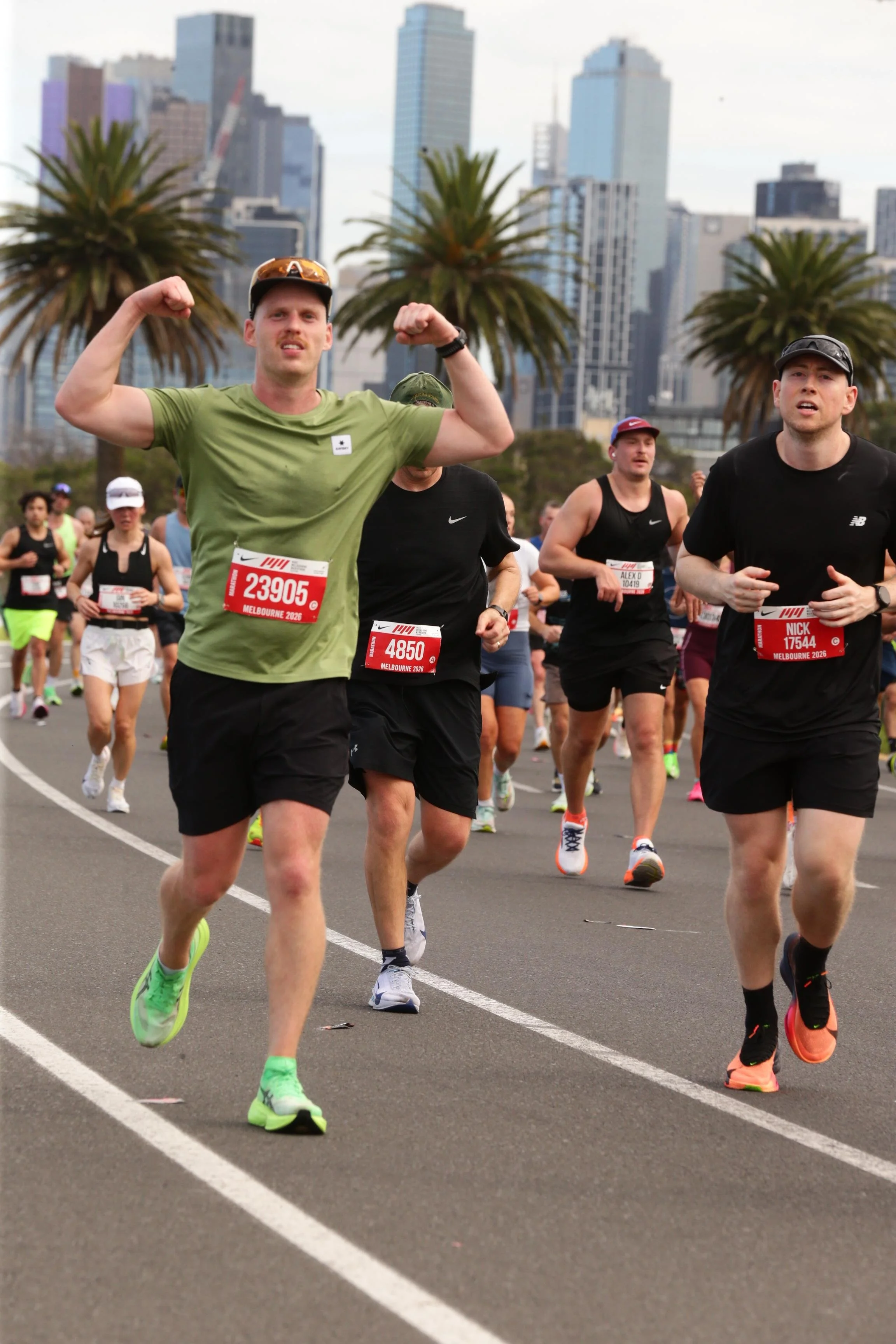
For his first Melbourne Marathon, Mitch chose a non-plated ASICS Megablast rather than a carbon-plated racing shoe.
Running Shoe Options
Mitch also highlighted several options worth considering, depending on your running needs and preferences.
Non-plated options:
ASICS Megablast
ASICS Superblast 3
Adidas Hyperboost Edge
Nike Vomero Plus
Carbon-plated options:
New Balance SC Elite 6
Puma Deviate Nitro Elite 4
HOKA Cielo 3.0
The best shoe choice will depend on the individual, including comfort, running mechanics, training demands and personal preference.
A carbon-plated shoe isn't automatically the best option for every runner.
6. What Would Mitch Do Differently Next Time?
Although Mitch was proud to complete his first marathon, reflecting on the experience helped him identify areas he would change before his next marathon block.
There were two main areas he wanted to improve.
Increase Weekly Running Volume
Mitch's peak training week reached approximately 52km.
Looking ahead, he would aim to gradually build towards 60–80km per week, maintaining that volume for a longer period to better prepare for the demands of the marathon.
Increasing weekly mileage progressively can help develop aerobic endurance and improve the body's ability to tolerate higher running loads.
However, this needs to be approached gradually, allowing enough time for the body to adapt.
Incorporate More Tempo Sessions
Mitch also wanted to include more structured tempo sessions in his next training block.
Tempo training helps develop lactate threshold, while interval training can target VO₂ max. Both are useful components of a structured running program.
During his first marathon preparation, Mitch was more cautious about increasing his running intensity because he wanted to minimise injury risk and successfully complete the event.
Next time, he would look to incorporate more tempo work and potentially use equipment such as the SkiErg to challenge his cardiovascular fitness while reducing some of the repetitive impact associated with additional running.
His biggest takeaway? It's not just about running further. It's about building the capacity to run further, faster and more efficiently.
7. How to Start Your Own Running Journey
You don't need to start by running long distances or pushing your pace. Whether your goal is your first 5km, 10km or eventually a marathon, building a solid aerobic foundation is key.
Mitch shared a few recommendations for those looking to get started.
Start With Low-Intensity Running
Begin by being realistic about your current fitness level.

If you're new to running, start with one easy run per week at a manageable distance, such as 2–3km.
Aim for a pace where you can comfortably hold a conversation. Your heart rate may initially increase more than expected, but your aerobic fitness will develop over time.
Gradually Add Another Run
Once you've established a routine, consider adding a second easy run on a non-consecutive day.
You can gradually build the distance of this second session into a longer run, while keeping your first run at a comfortable, steady pace.
Introduce Tempo Training When Ready
Once you've built up your running distance and can comfortably complete both sessions at an easy pace, you can consider introducing tempo training.
You may also use cardio equipment such as the SkiErg or rower to challenge your cardiovascular fitness without adding more running volume.
Remember to allow adequate recovery between sessions and consider how your running fits alongside any strength training.
Consistency Comes First
One of Mitch's biggest messages for beginner runners is that you don't need to run fast to become a better runner.
Building consistency, gradually increasing your training load and allowing your body enough time to recover are all important parts of long-term running development.
Final Thoughts
Mitch's first Melbourne Marathon was a learning experience that highlighted just how much preparation goes into running 42.2km.
From building weekly mileage and maintaining strength training to planning nutrition and choosing the right shoes, every part of preparation plays a role.
His experience also reinforces an important message: successful running development takes time, consistency and a training approach that suits your individual needs.
Whether you're working towards your first 5km or preparing for a marathon, having the right guidance can help you build your running fitness safely and confidently.
Looking to improve your running or prepare for your next event?
At Dynamic Physiotherapy, our team can help with running-related concerns, strength and conditioning, injury management and return-to-running guidance.
Get in touch with our team to book an appointment and discuss your running goals.
How Dynamic Physiotherapy Can Help
Building your running fitness involves more than just adding kilometres. Strength, movement, training load and recovery all play a part in preparing your body for the demands of running.
At Dynamic Physiotherapy, our team can help you:
Assess your running needs: Identify areas of weakness, movement limitations or factors that may affect your running.
Manage running-related injuries: Address pain and injuries while helping you understand how to manage your training load.
Build strength and conditioning: Improve the strength and stability needed to support your running.
Return to running: Follow a structured progression when getting back to training after an injury.
Our goal is to help you train with confidence, manage your physical demands and keep moving towards your running goals.
Key Takeaways
📌 Stay consistent: Building running fitness takes time. Focus on regular training rather than doing too much too soon.
📌 Increase gradually: Give your body time to adapt as you build distance and intensity.
📌 Prioritise nutrition and recovery: Fuel your training properly and allow enough time for recovery.
📌 Include strength training: Build the strength and capacity needed to handle the demands of running.
📌 Make your training individual: Your programme, shoes and nutrition strategies should suit your needs and goals.
Ready to Take the Next Step?
Have a running goal in mind? Our team at Dynamic Physiotherapy can help you prepare, improve your performance and work through any setbacks along the way.
Book an appointment with our team and start building towards your next running goal.
Written by:
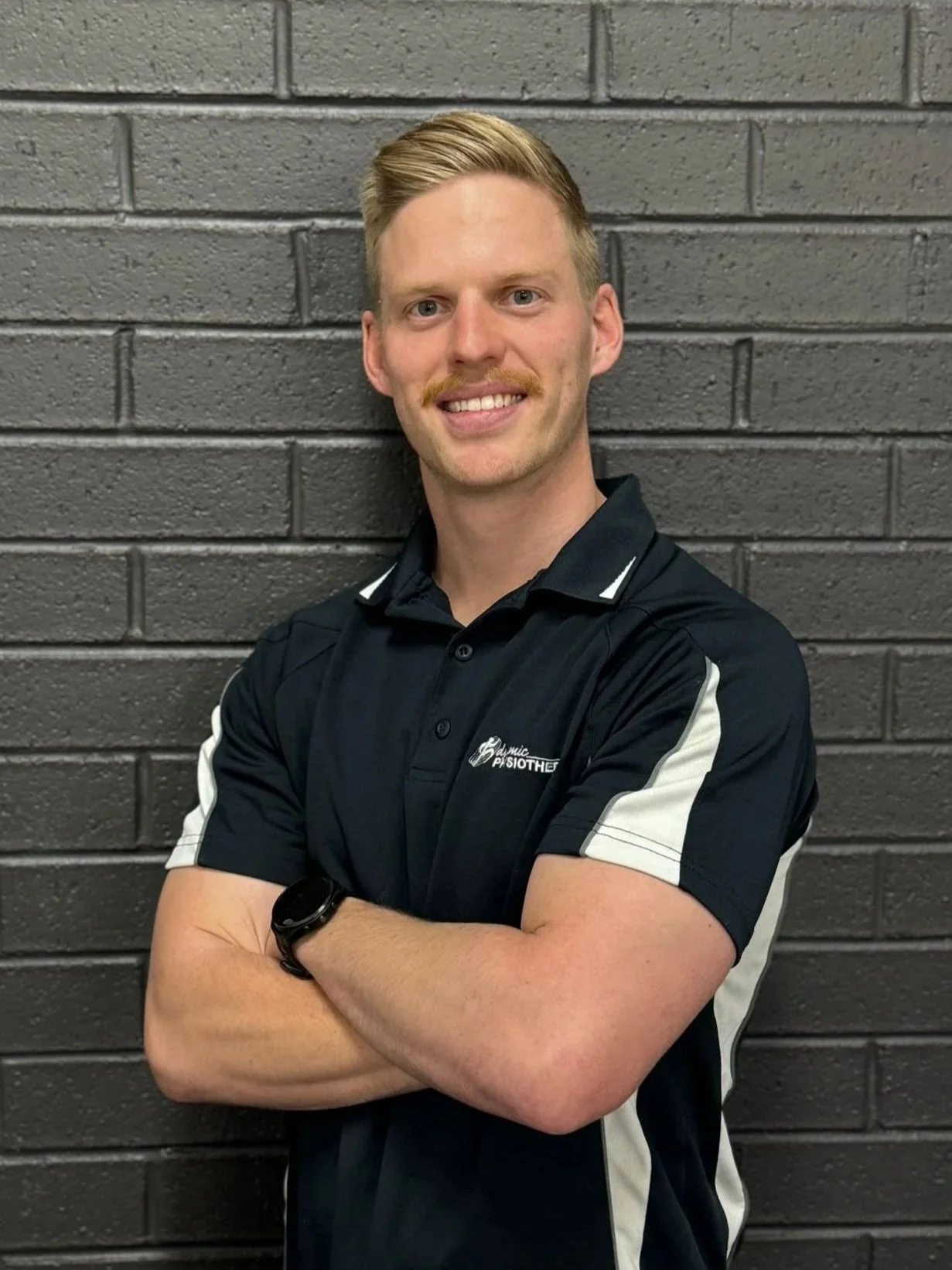
Mitchel Pennell
Physiotherapist | Dynamic Physiotherapy
Working towards a running goal or looking to improve your performance? Book an appointment with Mitch for a personalised assessment and guidance to help you build strength, improve your running and keep progressing towards your goals.
MOVE FREELY. TRAIN HARDER. PERFORM BETTER.