
Lateral Ankle Sprain: Understanding Your Injury & Early Management
What happens when you roll your ankle, how severe can a sprain be, and when might you need a Moon Boot?
Lateral ankle sprains are one of the most common injuries seen in sport and physiotherapy. They can happen during an awkward landing, a quick change of direction, a tackle, or simply stepping onto an uneven surface.
Because ankle sprains are so common, they can sometimes be underestimated.
You may be able to walk again within a few days, but that doesn't necessarily mean your ankle has fully recovered.
Understanding what has been injured and how severe the sprain is can help guide the right treatment and rehabilitation approach from the beginning.
What Is a Lateral Ankle Sprain?
A lateral ankle sprain occurs when the ligaments on the outside of the ankle are stretched beyond their normal limits or torn.
This commonly happens when the foot rolls inward, known as inversion, particularly when the ankle is also pointed downwards, known as plantarflexion.
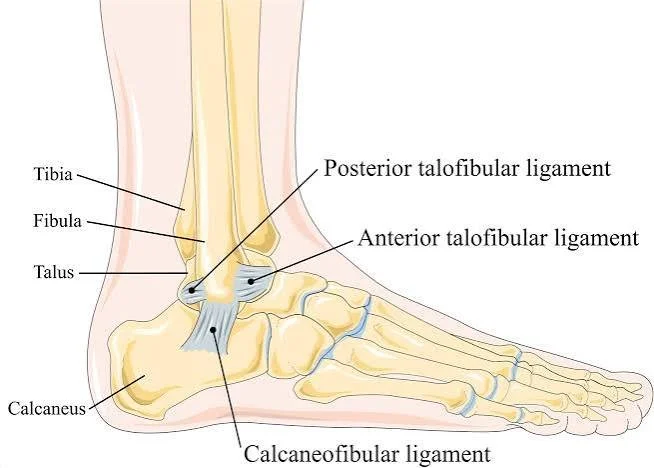
Ankle Anatomy
The anterior talofibular ligament (ATFL) is the ligament most commonly injured. With greater forces, the calcaneofibular ligament (CFL) may also be affected, while more severe injuries can involve the posterior talofibular ligament (PTFL).
Common situations that can cause a lateral ankle sprain include:
Landing awkwardly after a jump
Stepping onto an uneven surface
Quickly changing direction
Another player landing on your foot
Missing a step
Although the ligaments are the primary structures involved, an ankle sprain can also affect your range of motion, strength, balance, proprioception, and confidence.
This is why recovering from an ankle sprain involves more than simply waiting for the pain to settle.
How Severe Is Your Ankle Sprain?
Lateral ankle sprains are often classified into three grades:
Grade I: Mild ligament stretching with relatively minor pain and swelling. Walking is usually possible.
Grade II: A partial ligament tear with greater pain, swelling, bruising, and difficulty walking. Some instability may also be present.

Grade III: A complete ligament rupture, usually accompanied by significant swelling, bruising, pain, and marked instability. Weight-bearing may be very difficult.
The grade of an injury can help guide rehabilitation, but symptoms alone don't always tell the full story.
It's also important to remember that not every ankle injury is simply a sprain.
Following an acute ankle injury, clinicians may use the Ottawa Ankle Rules as part of their assessment to determine whether an X-ray may be required. This can be particularly important when there is specific bony tenderness or difficulty taking four steps.
If you're struggling to walk or have significant tenderness around the bones of the ankle or foot, getting assessed can help determine the appropriate next step.
Do You Need a Moon Boot?
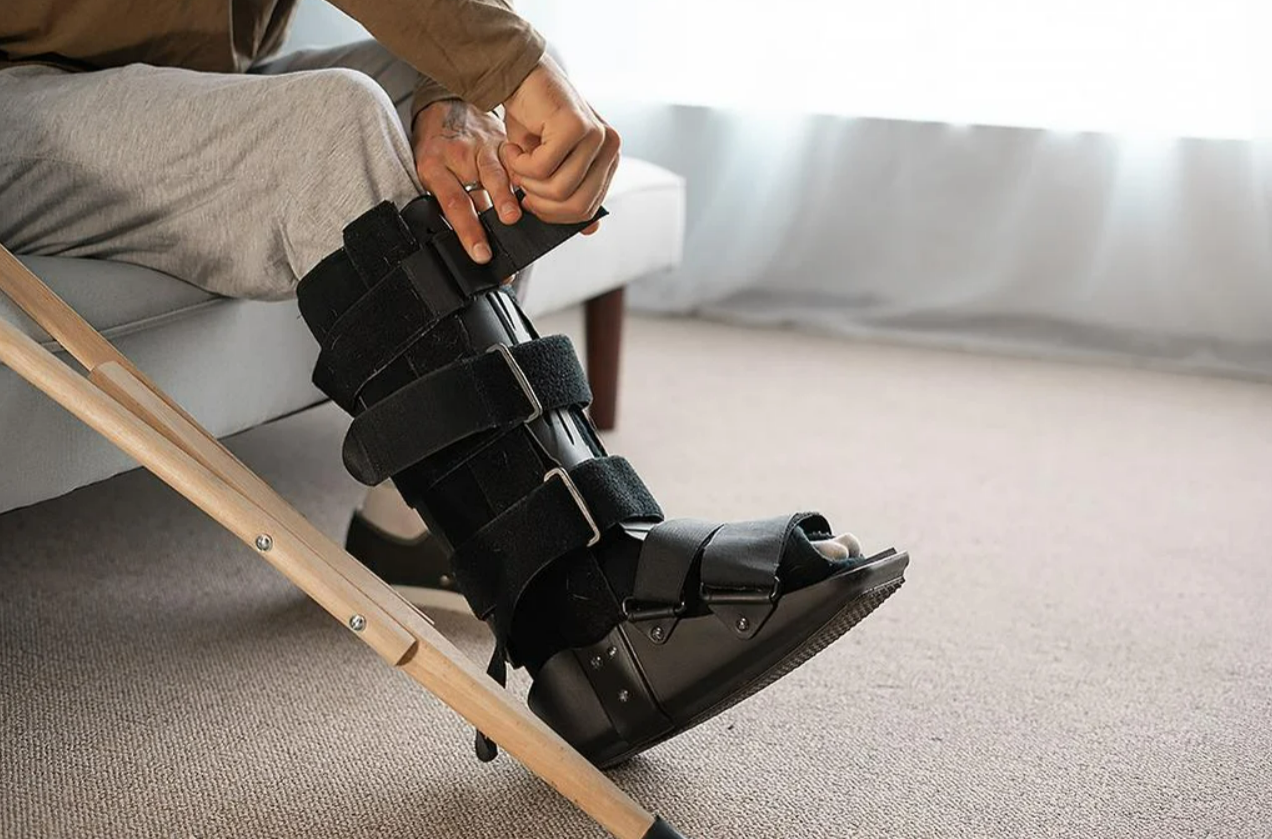
A Moon Boot can sometimes be useful during the early stages of a more severe ankle sprain, particularly when pain makes walking difficult.
However, not every lateral ankle sprain requires immobilisation.
Evidence generally supports conservative management of acute lateral ankle sprains, with protection and support used when appropriate alongside progressive rehabilitation. Research has not identified one single rehabilitation protocol that is best for every ankle sprain, which highlights the importance of tailoring treatment to the individual.
The goal is not simply to protect the ankle until it feels better.
It's to gradually restore movement, strength, balance, and function.
What Happens Next?
Once the ankle has been assessed and the initial stage of recovery is underway, the focus shifts from protecting the ankle to rebuilding its strength, movement, balance, and function.
But what does that rehabilitation actually look like?
In Part 2 of our Lateral Ankle Sprain series, we take you through the different stages of rehabilitation — from early strengthening and balance work through to plyometrics, sport-specific training, and return-to-sport testing.
👉 Continue reading: [Lateral Ankle Sprain: Rehabilitation & Return to Sport]
Final Thoughts
A lateral ankle sprain may seem like a minor injury, but understanding what has been injured and how severe it is can make an important difference to your recovery.
Early assessment can help determine whether you're dealing with a straightforward sprain or whether further investigation is required.
From there, your rehabilitation can be progressed according to your symptoms, injury severity, and goals.
How Dynamic Physiotherapy Can Help
At Dynamic Physiotherapy, we can assess your ankle injury, identify the structures and movements that may be contributing to your symptoms, and help determine the most appropriate treatment pathway.
Whether you've just rolled your ankle or are unsure whether you need further assessment, our team can help you understand your injury and what to do next.
Key Takeaways
📌 Lateral ankle sprains commonly involve the ligaments on the outside of the ankle, particularly the ATFL.
📌 Sprains can range from mild ligament stretching to complete ligament rupture.
📌 Not every ankle injury is simply a sprain, which is why appropriate assessment is important.
📌 A Moon Boot may be useful for some more severe injuries, but many ankle sprains can be managed with progressive rehabilitation.
📌 The right treatment approach depends on the individual, the injury, and their goals.
📞 Recently Rolled Your Ankle?
If you've recently rolled your ankle or are unsure how serious your injury is, our team at Dynamic Physiotherapy can help assess your ankle and guide you through the next steps.
Book an appointment today and take the first step towards a stronger recovery.
References
Wagemans J, Bleakley C, Taeymans J, et al. (2022). Evidence-based treatment choices for acute lateral ankle sprain: a comprehensive systematic review. European Review for Medical and Pharmacological Sciences.

Written by:
Mitchel Pennell
Physiotherapist | Dynamic Physiotherapy
If you’re recovering from a lateral ankle sprain and want a personalised assessment and rehabilitation plan, book an appointment with Mitch to take the next step towards getting back to: MOVE FREELY. TRAIN HARDER. PERFORM BETTER.